The Rainforest Alliance Certified seal means that some or all of the ingredients are sourced from farms that comply with the standards of the Sustainable Agriculture Network, which aims to promote sustainability in farming and protect farmers, forests, wildlife, and local communities. The seal is verified through on-farm inspections.

Note: this review is for the Rainforest Alliance Certified seal on food only.
This seal can be found on:
Processed foods, fruits and vegetables, coffee and tea, chocolate, nuts, vegetable oil and shortening
ORGANIZATION: Rainforest Alliance
url: www.rainforest-alliance.org
LABEL STANDARDS: Available for download from the Sustainable Agriculture Network website.
What this seal means
The Rainforest Alliance Certified seal means that some or all of the ingredients in the product were sourced from farms that are certified to the Sustainable Agriculture Network (SAN) standard, which aims to promote sustainability in farming and protect farmers, forests, wildlife, and local communities.
The Sustainable Agriculture Network, a coalition of conservation groups that work to promote sustainability in agriculture, developed the standards around four principle areas that SAN considers important for sustainable farming:
- Effective planning and management system
- Biodiversity conservation
- Natural resource conservation
- Improved livelihoods and human wellbeing
The standard for crop farms contains a total of 119 criteria, 37 of which are critical for certification. These critical criteria cover the four principle areas (a fifth applies only to cattle farms) and establish the fundamental baseline and guarantee of quality for the certified farms and producer groups. They cover the highest priority and highest risk environmental, social, and labor issues.
The other criteria are part of the continuous improvement system, and farms have to demonstrate an increasingly higher degree of compliance with those criteria over time. Continuous improvement criteria are divided into three levels: A, B, and C. By the sixth year of certification, 100 percent of levels B and C criteria have to be met, as well as 50 percent of criteria in Level A.
The continuous improvement criteria cover fourteen areas:
- Effective planning and management systems
- Native vegetation
- Wildlife management
- Soil conservation and management
- Water conservation
- Water quality
- Integrated pest management
- Pesticide management
- Waste management
- Energy and greenhouse gas emissions
- Employment conditions and wages
- Living wage—essential needs for workers and their families
- Occupational health and safety
- Community relations

Percentage of the product’s contents that need to be certified
At least 90 percent of the contents of a product bearing the Rainforest Alliance Certified seal (without a qualifying statement) has to be certified, both for products with a single ingredient (e.g., coffee beans) and multiple ingredients (e.g., a chocolate bar or a fruit smoothie).
Even single-ingredient products, like a package of coffee beans, bearing the Rainforest Alliance Certified seal without a qualifying statement can contain between 90 and 100 percent certified content, which means that as much as 10 percent of the ingredients may not come from certified farms.
For single-ingredient products that have between 30 and 90 percent certified content, the business is required to scale up the percentage of certified content over time, with specific benchmarks and timelines.
Products that contain between 30 and 90 percent certified content can bear the seal with a qualifying statement that discloses the percentage of certified content.
While a percentage disclaimer is required, it does not need to appear on the front of the package where the seal appears. The percentage disclaimer can be displayed on the back label, which consumers may not see unless they turn the package over to read the ingredients and fine print.
Businesses selling single-ingredient products bearing the Rainforest Alliance Certified seal with less than 90 percent certified content are also required to scale up over time and achieve 100 percent of the ingredient sourced from Rainforest Alliance certified farms.
For multi-ingredient products, the package can bear the seal when at least 90 percent of a “core ingredient,” such as cocoa in a chocolate bar or bananas in a fruit smoothie, are from certified farms. In this case, the core ingredient has to be identified under or near the seal.
While other ingredients do not have to be certified, Rainforest Alliance encourages businesses to source all ingredients from certified farms and may require manufacturers to develop a sustainable sourcing plan to acquire other ingredients from certified or responsibly managed sources when they are available in the needed quantities.

Standards: a closer look
Biodiversity conservation
The critical criteria in the area of biodiversity conservation include:
- Prohibition on destroying high conservation value areas, which would include “concentrations of biological diversity,” “intact forest landscapes,” and “rare, threatened or endangered ecosystems, habitats or refugia.” Converting these areas to farm fields would constitute destruction and is prohibited.
- In the five-year period prior to the date of the initial application for certification, or January 1, 2014, whichever date is earlier, the farm is required to conserve all natural ecosystems and not destroy forests or other natural ecosystems.
- Production activities that degrade any protected area are prohibited.
- Hunting or killing endangered or protected animals is prohibited.
Natural resource conservation
The critical criteria in the area of natural resource conservation include:
- Wastewater from processing operations is not discharged into aquatic ecosystems unless it has been treated and meets quality parameters.
- Untreated sewage is not discharged into aquatic ecosystems.
- The farm has developed and implemented an integrated pest management plan that is based upon the prevention and monitoring of pests and aims to avoid economically significant crop losses while reducing pesticide risks. See more info below in the section on “pesticide use.”
- The use of 152 specific pesticides is prohibited, and only pesticides that are legally registered in the country can be used.
- Pesticide application by aircraft complies with SAN requirements for aerial fumigation.
- No GMOs are permitted.
- The use of human sewage in production or processing activities is not allowed.
Farmers and farmworker rights
The critical criteria in the area of improved livelihoods and human well-being include:
- Forced, compulsory, or slave labor is prohibited.
- The mistreatment of workers and sexual harassment are not allowed.
- All forms of discrimination are prohibited.
- Workers have the right to establish and join worker organizations of their own free choice.
- Workers are paid minimum wage or wages are negotiated collectively, whichever is higher.
- The worst forms of child labor are prohibited.
- Child laborers under 15 years are not contracted, and conditions for young workers are met.
- No avoidance of benefits, such as employing contract or temporary workers for permanent or ongoing tasks.
- A grievance mechanism is in place to protect workers’ rights.
- Regular working hours for all workers do not exceed 48 hours per week, with at least one full day of rest for every six consecutive days worked.
- All overtime is voluntary and paid at the rate required by applicable law or as collectively negotiated, whichever is higher.
- Farmers, workers, and their families have access to drinking water.
- Basic conditions for housing are met, if housing is provided to workers and their families.
- An Occupational Health and Safety plan is in place.
- Personal Protective Equipment is provided free of cost to workers who handle pesticides or other hazardous materials.
- Training on pesticide risks is provided for pesticide handlers.
- All pesticide handlers use bathing facilities after handling pesticides.
- Women who are pregnant or nursing are not assigned to activities that pose a risk to the mother, infant, or fetus.
- Legitimate right to use the land is demonstrated by ownership, leasehold, or other legal documents or by documentation of traditional or community land rights.
- Activities diminishing the land or resource use rights or collective interests of communities are conducted only having received the communities’ free, prior and informed consent.
More information on pesticide use
The implementation of an integrated pesticide management plan is a critical criterion. The farm management develops and implements a plan based on the prevention and monitoring of pests and aims to avoid economically significant crop losses while reducing pesticide risks. Pests are managed using biological controls and other non-chemical methods where feasible. When pesticides are used, preference is given to non-restricted low toxicity pesticides, and pesticides are applied only to the parts of the crop affected by pests. The use of substances on the SAN List of Prohibited Pesticides is not allowed.
This list of prohibited substances contains 152 pesticides, including those that have been recognized by international agencies, such as the Food and Agriculture Organization/World Health Organization Panel of Experts on Pesticide Management, as highly hazardous. SAN includes other pesticides on the prohibited list, such as atrazine, because of scientific evidence of water contamination.
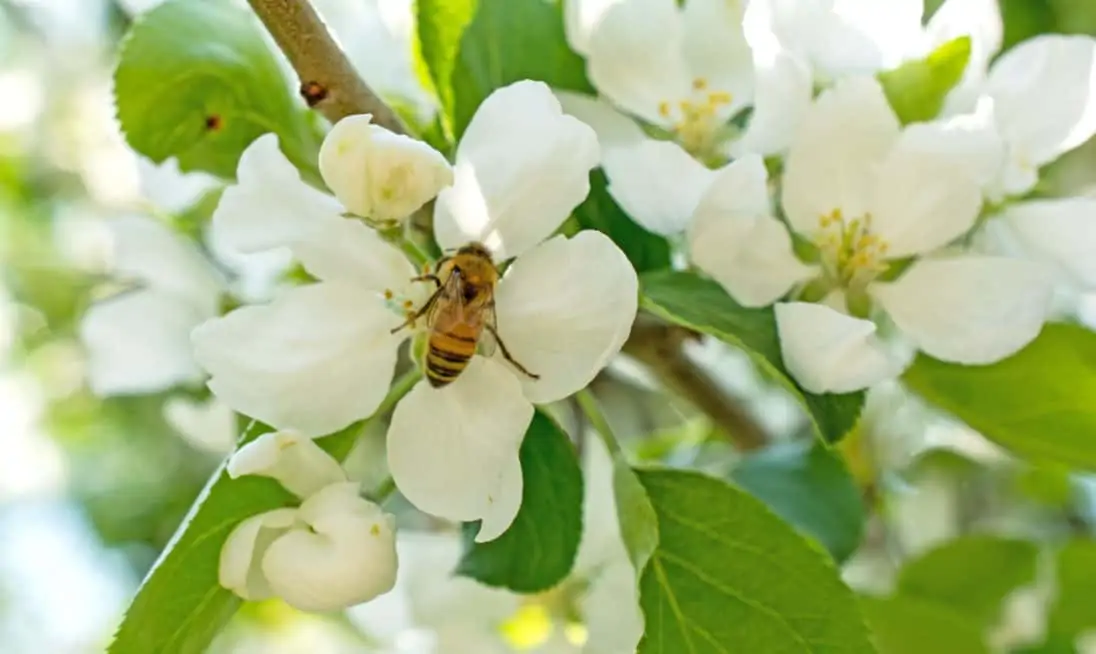
Three neonicotinoid pesticides, including imidacloprid, are prohibited because they significantly affect bee populations, other pollinators, and birds. They can also persist in soils for years and can leach into waterways and groundwater, where they have depleted insect abundance and diversity. Other neonicotinoids, such as acetamiprid, are not on the prohibited list.
In terms of the pesticides that are prohibited, SAN does not take a precautionary principle approach to pesticide use. Newer toxic and synthetic pesticides are not immediately prohibited, as they are in organic agriculture. Rather, newer pesticides can be used. For example, the SAN standard allows the use of glyphosate, a widely used herbicide which is listed as probably carcinogenic to humans by the International Agency for Research on Cancer (IARC), based on strong evidence that exposure to glyphosate or glyphosate-based formulations is genotoxic. Studies in experimental animals and in vitro humans also provide strong evidence that glyphosate can act to induce oxidative stress.
For pesticides that are allowed, SAN recognizes specific risks and has requirements to mitigate those risks to human workers/bystanders, aquatic life, wildlife, and pollinators. SAN’s list of pesticides that can be used with risk mitigation contains 168 pesticides, including herbicides like 2,4-D and insecticides like chlorpyrifos.
The use of pesticides with risk mitigation is part of the continuous improvement system. This means that these pesticides can be used without risk mitigation for the first years of certification. A product with the Rainforest Alliance Certified seal therefore could have been grown with these pesticides. By year three of certification, the risk mitigation requirements have to be met. More information on shade grown
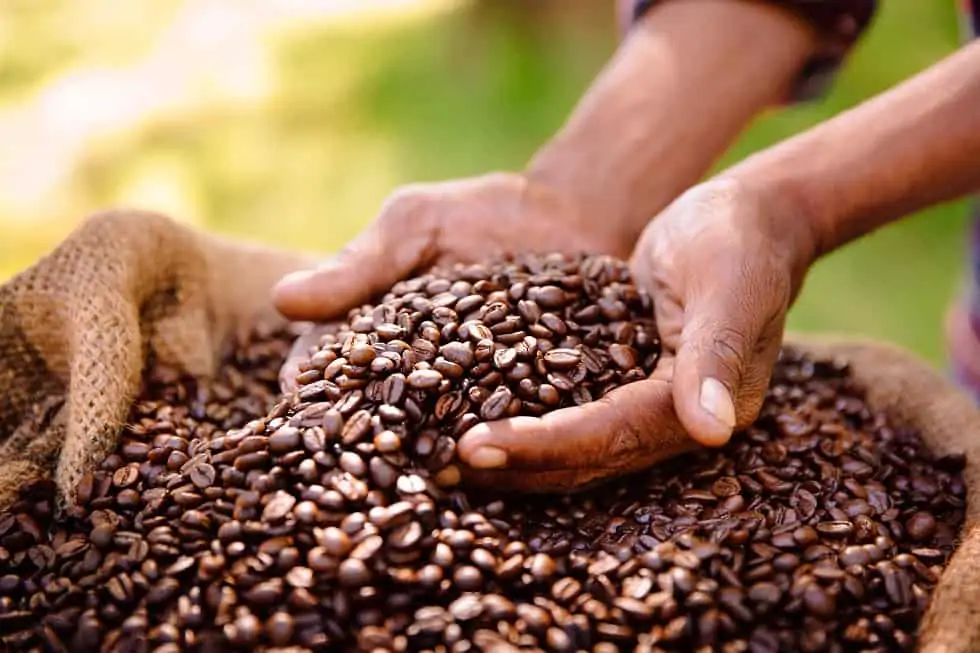
The Rainforest Alliance Certified seal on a package of coffee does not assure consumers that the coffee beans were “shade grown.” Coffee farms producing shade-grown beans maintain tree canopy as habitat for native and migratory birds and other wildlife. Farms can be certified without canopy cover for shade-tolerant crops.
If the farm or group of member farms has less than 10 percent total native vegetation cover (or less than 15 percent total native vegetative cover for farms growing shade-tolerant crops), the farm management and group administrator develop and implement a plan to progressively increase or restore native vegetation. This is a continuous improvement criterion in Level C, which means the plan has to developed by the third year of certification.
The Rainforest Alliance Certified seal does not guarantee that shade-tolerant crops like coffee or cocoa were shade grown. The standards indeed include a criterion stating that farms with agroforestry crops, such as coffee, must provide at least 40 percent tree cover, with at least 12 different tree species. But this is not a critical criterion; it is a continuous improvement criterion in Level A, which means it does not necessarily have to be met, even by the sixth year of certification. More information on GMOs
The seal does not mean that products are non-GMO. It means that the certified crops do not consist of genetically modified organisms and are not repackaged or processed with GMO products. This is a critical criterion, which means it must be met for initial certification. The seal does not mean that other, non-certified ingredients in a multi-ingredient food are produced without GMOs (such as sugar in a chocolate bar made with Rainforest Alliance certified cocoa).
Is the seal verified?
Yes.
Is the meaning of the seal consistent?
No. Producers do not have to meet all the requirements in the standards to be certified. The seal can appear on a product label when only a percentage — as low as 30% — of the ingredients are certified, even in single-ingredient products like a bag of coffee beans.
Are the standards publicly available?
Yes.
Is information about the organization publicly available?
Board of Directors: Yes. The members of the board of directors are listed on the website, both for the Rainforest Alliance and the Sustainable Agriculture Network.
Financial information: Yes. Financial information for both Rainforest Alliance and the Sustainable Agriculture Network is available on their respective websites. The Rainforest Alliance also publishes a list of major donors.
Is the organization free from conflict of interest?
Standards development: The standards are developed by the Sustainable Agriculture Network (SAN). SAN has an International Standards Committee (ISC) which serves as the advisory committee to the Board of Directors on standards, and the Board of Directors approves the final versions of all standards. ISC members declare any potential conflict of interest regarding the development or revision of standards, and the Secretariat can exclude a member from a specific process due to a specific conflict of interest.
Verification: Yes. Verification is free from conflict of interest.
Were the standards developed with broad public and industry input?
Standards development: Yes. The standards were developed with broad public and industry input by the Sustainable Agriculture Network.
Standards updates: Yes. When the standards are updated, public consultations are carried out and organizations and individuals in different countries are asked to comment on the revised standard. The standards are posted online for public review and comment.