- The Certified Humane Raised and Handled label is meaningful and verified. The standards behind the label require improvements to the industry norm in how farm animals are raised; for example, there are requirements for clean litter in chicken houses, bedding for pigs, and environmental enrichment for chickens and pigs. However, we do not rate Certified Humane as a highly meaningful label for animal welfare, because the standards do not have certain requirements that a majority of consumers expect from a “humanely raised” label, such as access to the outdoors.
Is the label verified?
Yes
Is the meaning of the label consistent?
Yes
Are the label standards publicly available?
Yes
Is information about the organization publicly available?
Yes
Is the organization free from conflict of interest?
Yes
Was the label developed with broad public and industry input?
Partially
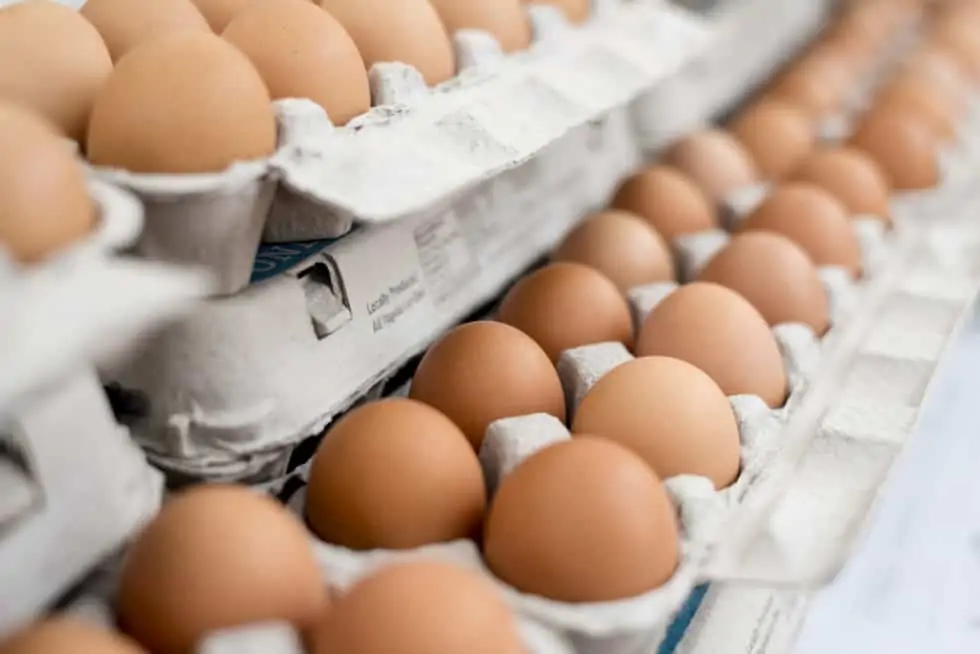
This label can be found on: Beef, chicken, eggs, dairy (including cow, sheep and goat dairy), goat, pork, sheep, turkey
ORGANIZATION: Humane Farm Animal Care (HFAC)
url: http://certifiedhumane.org
LABEL STANDARDS: http://certifiedhumane.org/how-we-work/our-standards/
What this label means
This label means that the animals were raised on farms that met the farm animal welfare standards of Humane Farm Animal Care, an organization that says it is dedicated to “improving the lives of farm animals in food production from birth to slaughter,” and that it does so by “driving consumer demand for kinder and more responsible farm animal practices.”
The organization says its standards assure consumers that meat, poultry, egg and dairy products come from animals that “are never kept in cages, crates or tie stalls;” have the freedom to do what comes naturally; have been been fed a diet of “quality feed, without animal by-products, antibiotics or growth hormones;” and are slaughtered in accordance with American Meat Institute slaughter standards.
In our analysis, we found that the standards assure that most of these goals are met. Chickens and pigs have to be provided with materials, such as clean, dry litter, perches, and straw, to engage in natural behaviors. Small cages that do not allow the animals to turn around are prohibited. However, some farming practices that consumers expect from a “humanely raised” label are not required to be accommodated, like access to the outdoors and fresh air for chickens and pigs, which can be continually confined indoors with no requirement for natural light in the building and ammonia levels that can rise as high as 25 ppm. Indoor space requirements for chickens only slightly exceed the industry norm, while indoor space requirements for pigs are the same as the industry norm. Beef cattle can be finished in a feedlot, although standards aim to improve the living conditions in the feedlot. While the standards prohibit many physical alterations, like routine tail docking of pigs, others are allowed, like beak trimming of laying hens.
A closer look at the standards for broilers (chicken)
Indoor space per bird
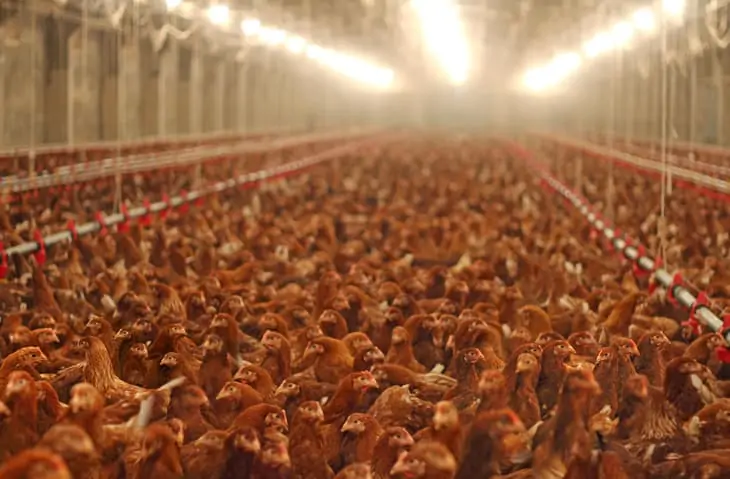
The indoor space requirement for a chicken is roughly 11 inches by 11 inches for a 5-pound bird (or 0.83 sq. ft.) which is only slightly more (a 23.9% increase) than the chicken industry standard of roughly 9.6 inches by 10 inches for a 5-pound bird (0.67 sq. ft.).
The standards require that chickens must “be able to without difficulty, to stand normally, turn around and stretch their wings,” but do not specify that chickens must be able to walk around freely.
Clean litter
The floor of all housing must be completely covered with litter. Litter must be clean, dry, dust-free and absorbent, and be managed to maintain it in a dry, friable condition. Litter must be skimmed and topped up as necessary with fresh litter. Wet or otherwise contaminated litter must be replaced promptly. This requirement exceeds the industry norm.
Indoor air / Ammonia levels
The standards state that ammonia concentration at bird height should be less than 10 ppm and must not exceed 25 ppm except during brief periods of severe inclement weather when ventilation is affected. Ammonia in the air is caused by the buildup of feces and urine. Ammonia is a colorless gas with a penetrating and pungent odor, and humans can smell ammonia when levels are above 5 ppm. Some studies suggest levels of 25 ppm could have detrimental health effects to the animals, including irritating the membranes of the lungs and eyes.
Lighting
A minimum of 6 hours of darkness in every 24-hour cycle, except during the first few days and last three days of life. Natural light is not required.
Indoor environmental enrichment
The standards require enrichment in the chicken house, which should be used to stimulate exploratory, foraging and locomotive behavior and minimize injurious pecking. Approved enrichment includes ramps, low perches, pecking blocks, straw bales, scattering of whole grains, cabbages, cauliflowers, sprouts, broccoli, rounded tubes, hanging wooden blocks. The standards also include guidance and recommendations to producers for providing an enriched environment.
Outdoor access
Outdoor access is not required and the birds can be continually confined indoors.
In free-range systems, where the chickens are given access to the outdoors, the standards require that the outdoor area must consist mainly of living vegetation, and must be designed and actively managed to encourage birds to go outside. The minimum outdoor space requirement is 2.5 acres for 1,000 birds (roughly 10.4 feet by 10.4 feet or 108.9 ft2 per hen). Outdoor access has to be granted by the time the chickens are four weeks old.
Genetics and better breeds / limit on fast growth
During selection of birds, care must be taken to select birds for high welfare traits and avoid genetic strains with undesirable traits. This is a vague requirement, and when asked which strains or “undesirable traits” would be prohibited, the organization behind the label responded that “the standards leave it up to the farmer to make those choices and the inspector can inspect and determine whether their choice is appropriate or not.” The standards have no limit on rate of growth. This slightly exceeds the industry norm of using chickens that have been bred for rapid growth at the expense of the bird’s health and welfare.
Slaughter
The standards require that managers appoint at least one trained Animal Welfare Officer (AWO), who is responsible for the implementation of the animal welfare policy during processing (slaughter). The AWO must make frequent checks throughout the day to ensure that birds are being effectively stunned and are insensible to pain throughout the slaughter operation. The standards require proper shackling and stunning prior to slaughter and entering the scalding tank, including checking birds leaving the stunner to ensure they have been effectively stunned or killed prior to entering the scalding tank.
A closer look at the standards for laying hens (eggs)
Cages
The standards prohibit raising hens in crowded cages without enrichment (e.g., nest boxes, roosts). This requirement exceeds the industry norm, which is to raise laying hens in crowded, barren cages. Enriched colony system housing systems, which house laying hens in cages that can be opened during the day and provide perches, nest boxes and scratching pads, are also prohibited.
Indoor space per bird
The indoor space requirement for laying hens is 1.5 sq. ft. per hen. which is roughly 14.5 inches by 15 inches. This only slightly exceeds the industry standard for this type of housing, which is 12 inches by 12 inches (or 1 sq. ft.) for a White Leghorn laying hen and 13 inches by 13.3 inches (or 1.2 sq. ft.) for a brown laying hen.
The space requirements in different types of houses are less. In a house with a raised slatted area, the minimum space requirement is 13 inches by 13.3 inches (or 1.2 sq. ft.). In houses with multiple tiers and sufficient space for at least 55% of the hens to perch, the minimum space requirement per hen is 12 inches by 12 inches (or 1 sq. ft.).
In pasture-raised systems with mobile houses with fully perforated flooring, the indoor space requirement is also 12 inches by 12 inches, but indoor space in pasture-based systems is less important since hens can forage outdoors and are not continually confined indoors.
Clean litter
Litter must be clean, dry, dust-free and absorbent, and be managed to maintain it in a dry, friable condition. Litter must be skimmed and topped up as necessary with fresh litter. Wet or otherwise contaminated litter must be replaced promptly. This requirement exceeds the industry norm.
A minimum of 15% of the available floor space must be covered with litter, which is in line with the industry norm.
Indoor air / Ammonia levels
The standards state that ammonia concentration at bird height should be less than 10 ppm and must not exceed 25 ppm except during brief periods of severe inclement weather when ventilation is affected. Ammonia in the air is caused by the buildup of feces and urine. Ammonia is a colorless gas with a penetrating and pungent odor, and humans can smell ammonia when levels are above 5 ppm. Some studies suggest 25 ppm could have detrimental health effects to the animals, including irritating the membranes of the lungs and eyes.
Lighting
Within each period of 24 hours, the lighting system in the hen house must provide a minimum of 8 hours of continuous light and a minimum of 6 hours of continuous darkness. Natural light is not required.
Indoor environmental enrichment
The standards require perches (at least six inches per hen), nest boxes (at least one per five hens) and litter for dust bathing. Additional indoor environmental enrichment is not required.
Outdoor access
Outdoor access is not required and the birds can be continually confined indoors. This does not exceed the industry norm.
However, the standards require outdoor access if the egg carton also has the words “free range” or “pasture-raised.”
When a carton of eggs has a “free range” claim on the label in addition to the Certified Humane label, it means that the hens were provided a minimum outdoor area of roughly 16 inches by 18 inches per hen (or 2 sq. ft.).
When a carton of eggs has a “pasture-raised” or similar claim on the label in addition to the Certified Humane seal, it means that the hens were raised on pasture, with a total of 2.5 acres of pasture per 1,000 hens (roughly 10.4 feet by 10.4 feet or 108.9 ft2 per hen). The pasture must consist mainly of living vegetation and must be rotated periodically to prevent the land from becoming contaminated and or denuded, and to allow it to recover from use.
Beak trimming
The standards allow beak trimming, which is the industry norm. When chickens are closely confined in crowded spaces and are not given the opportunity to engage in their natural “scratching-and-pecking” behaviors, feather pecking — chickens pecking at each other — is often a problem and can become a serious welfare concern. Beak trimming should not be needed in a system that allows more space, freedom of movement, and the ability to engage in natural foraging behaviors.
A closer look at the standards for pigs (pork)
Indoor space per growing pig
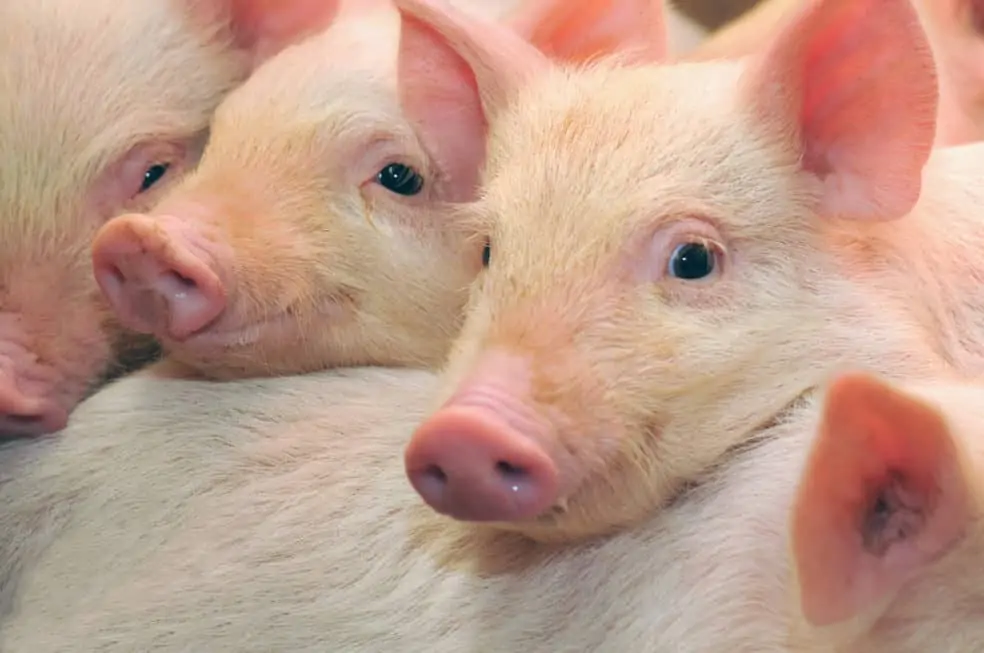
The standards for pigs have minimum indoor space requirements, which vary depending on the weight of the pigs and do not exceed the industry norm. For growing pigs, a 66-pound animal has a minimum total area of 1.8 feet by 1.8 feet (or 3.3 ft2), a 132-pound pig has a minimum total area of of roughly 2.4 ft by 2.4 ft (or 5.9 ft2), a 176-pound pig has a minimum total area of of 3 ft by 2.4 ft (or 7.2 ft2) and a 264-pound pig has a minimum total area of roughly 3 feet by 3 feet (or 9.1 ft2).
Crates for gestating and farrowing sows
Farrowing crates and gestation crates that do not allow the sow to turn around are prohibited. The farrowing pen has to be at least 6 by 8 feet and has to be bedded (such as with straw). Approximately 48 hours prior to farrowing, the sow must be provided materials that allow her to carry out her natural nesting behavior. This exceeds the industry norm of housing pregnant sows (gestating sows) and sows with piglets (farrowing sows) in crates that are too small to allow the sow to turn around or move freely.
Clean bedding
The standards require that pigs kept indoors have access at all times to a lying area that is of solid construction (i.e. not perforated) and bedded to a sufficient extent to avoid discomfort. Bedding is also required in the pens that house sows with piglets.
Indoor air / ammonia levels
The standards state that ammonia concentration at bird height should be less than 10 ppm and must not exceed 25 ppm except during brief periods of severe inclement weather when ventilation is affected. Ammonia in the air is caused by the buildup of feces and urine. Ammonia is a colorless gas with a penetrating and pungent odor, and humans can smell ammonia when levels are above 5 ppm. Some studies suggest 25 ppm could have detrimental health effects to the animals, including irritating the membranes of the lungs and eyes.
Indoor environmental enrichment
The standards require providing enrichment in the housing, to allow the pigs to perform natural rooting behaviors. They must, at all times, have access to straw or other suitable media such as wood chips, sawdust or peat for the expression of rooting, pawing, mouthing and chewing behaviors. The standards also require the provision of other objects for manipulation, such as chains, balls, and materials such as rope. This exceeds the industry norm of raising pigs in houses without providing environmental enrichment.
Outdoor access
Outdoor access is not required and the pigs can be continually confined indoors.
If the producer chooses to raise pigs outdoors, the standards have requirements for a windproof, waterproof and bedded shelter in the winter, and a shaded area in the summer when there is a risk of heat stress and sunburn. In the summer, the pigs must also be provided with wallows, drips or sprinkler.
Physical alterations
The standards prohibit routine tail docking. If the risk of tail biting exists, other measures should be taken to prevent tail biting such as environmental enrichment or reducing stocking densities. When tail biting occurs, pigs must promptly be given additional stimuli to encourage foraging or other non-injurious behavior. Tail docking is permitted only after Humane Farm Animal Care (HFAC), the certifying organization for the Certified Humane label, is notified and approves the measure.
Teeth filing of newborn piglets is allowed, as long as no more than one third of the tooth is removed.
Castration must be done before pigs are 7 days old, and pain relief is not required. Pain relief (anesthetic and post-operative analgesic) is required only when pigs older than 7 days old are castrated.
Nose ringing is prohibited.
For permanent identification, ear notching is prohibited, and if used, justification must be presented to HFAC. Ear tagging, slap marking and tattooing are permissible when it is necessary to mark pigs for permanent identification.
Slaughter
For slaughter, the standards have three requirements: the pre-slaughter handling of pigs must be kept to an absolute minimum, personnel involved in slaughter must be thoroughly trained and competent to carry out the tasks required of them, and all slaughter systems must be designed and managed to ensure livestock do not experience unnecessary distress or discomfort. Producers must use processors (slaughter plants) that follow American Meat Institute (AMI) guidelines for processing pigs, which is the industry norm. HFAC inspectors audit processors based on the AMI guidelines.

A closer look at the standards for cattle (beef)
Pasture
Grazing on pasture is not required during the finishing period. Cattle may be finished in feed yards. Windbreaks and sunshades are required for cattle in feedlots.
Pain relief during castration
Pain relief during castration is required if the procedure is performed after 7 days of age. Pain relief is not required for castrating calves younger than 7 days by the application of a band (rubber ring).
Hot iron branding
The standards do not prohibit hot iron branding. Only face branding is prohibited, which is in line with the industry norm. Marking for identification purposes must be done with care by a trained, competent operator so as to avoid unnecessary pain and distress.
Branding is one of the methods used for identification of cattle. Industry guidelines recommend branding on the hip area, and state that cattle should never be branded on the face or jaw. While the practice of branding is becoming less common and other methods of identification are increasing in popularity, the most recent survey data, from 2008, show that nearly 40% of cattle are still marked by branding.
Disbudding
Pain relief is required when calves are disbudded.
Slaughter
For beef slaughter, the standards have three requirements: the slaughter plant must meet the American Meat Institute (AMI) Guidelines which is the industry norm, the slaughter plant has to be inspected by HFAC inspectors to verify compliance with AMI Guidelines, and HFAC will audit the slaughter plant for traceability to ensure that all the product that is labeled with the Certified Humane logo originates from Certified Humane plants.
A closer look at the standards for:
Antibiotic use
The standards prohibit the use of antibiotics for reasons other than disease treatment. However, the standards do not apply to poultry hatcheries, where antibiotics for disease prevention could be used on a routine basis.
To protect public health and combat the global threat of antibiotic resistance, antibiotics should only be used in animal agriculture to treat diagnosed disease. It is the industry norm to use antibiotics for disease prevention and control as well as for disease treatment. The Certified Humane standards exceed the industry norm for antibiotic use (except that the Certified Humane standards are not verified in poultry hatcheries).
Drugs for growth promotion
Growth hormones (beef only)
Growth hormones are prohibited.
The FDA allows beef cattle to be implanted with growth hormones. The Certified Humane standards exceed the industry norm for growth hormone use.
Beta agonists (beef, pork, turkey)
The use of growth promoters added to feed is prohibited.
The FDA allows growth promoting drugs such as beta-agonists to be added to beef cattle, pig and turkey feed. By prohibiting growth promoters in feed, the Certified Humane standards exceed the industry norm.
Animal by-products in feed
Animal by-products are prohibited in feed, including mammalian and avian-derived protein.
The FDA prohibits ruminant-derived protein sources in dairy cow and beef cattle feed, but allows pig and poultry slaughter waste products, poultry litter and feces. In pig and poultry feed, the FDA does not restrict the use of slaughterhouse waste products and waste from livestock operations, such as poultry litter and feces. The Certified Humane standards exceed the industry norm for animal byproducts in feed.
GMOs in feed
The standards do not prohibit GMOs in feed.
CONSUMER REPORTS EVALUATION
How meaningful is this label?
The Certified Humane label is meaningful. In many areas, the standards behind the label require improvements in the living conditions of food animals, and these requirements exceed the industry norm for how food animals are raised. For example, the standards prohibit confinement in barren cages that prevent the animals from turning around, which is the industry norm for pigs and laying hens. The indoor environment for chickens has to be maintained with clean litter and provide enrichment that allows the chickens to engage in exploratory and foraging behaviors.
However, we do not rate the Certified Humane label as highly meaningful for animal welfare because the standards do not always exceed the industry norm. Indoor space requirements for pigs, for example, do not exceed the industry norm, and a a 176-pound pig, for example, can be given as little as a total area of of 3 ft by 2.4 ft. The standards for beef cattle allow feedlots and do not require access to pasture and grazing. Outdoor access for laying hens, chickens, and pigs is not required.
Our 2016 consumer survey shows the percentage of consumers who believe a “humanely raised” labeling claim should mean that:
- The farm was inspected to verify this claim (88%)
- The animals had adequate living space (86%)
- The animals were slaughtered humanely (80%)
- The animals were raised in houses with clean air (78%)
- The animals went outdoors (78%)
- The animals were raised without cages (66%)
Is the label verified?
Yes. Humane Farm Animal Care (HFAC), the organization that develops and maintains the standards, inspects and monitors the certified farms. The inspectors have to have a master’s or Ph.D. in animal science. HFAC staff makes the final decision regarding certification.
Is the meaning of the label consistent?
Yes. All the requirements must be met for the product to be certified.
Are the label standards publicly available?
Yes.
Is information about the organization publicly available?
Yes.
Board of Directors: Yes. The members of the Board of Directors and their affiliations are listed on the website.
Financial information: Yes. The IRS Form 990 with financial information is publicly available.
Is the organization free from conflict of interest?
Yes.
Standards development: Yes. The Board of Directors has the final authority over the standards. The organization has a policy that prohibits board members who have or may have a conflict of interest from discussing and voting on the standards.
Verification: Yes. The organization has a policy that prohibits inspectors who have or may have a conflict of interest from inspecting the farm. The final decision regarding certification must be made by a staff member who does not have an interest in the operation.
Was the label developed with broad public and industry input?
Partially.
Standards development: Yes. The standards were developed by the organization’s scientific committee, which consists of academic animal welfare experts and veterinarians.
Standards updates: Partially. Updates to the standards are generated by the Scientific Committee or Humane Farm Animal Care staff. The changes are shared with all producers, who are invited to submit comments. Comments are reviewed and incorporated by the Scientific Committee. Updates are not posted for public comment.